
Articles
Best Plants Around a Pool in New Zealand: What to Choose and Where to Plant Them
A little greenery can make a new pool feel like it belongs in your backyard. Plants soften the paving, provide privacy, and create a more inviting place to sit between swims. Choose carefully, and you can enjoy those benefits without creating an endless supply of leaves to scoop out.
Compact New Zealand flax, mondo grass, and liriope are useful starting points for poolside planting. Tractor seat plants suit sheltered, shaded beds, while bird of paradise and star jasmine can add height and interest in warmer, protected positions.
The best choice for your pool depends on sunlight, available space, local growing conditions, and how much maintenance you want. Here’s how to narrow it down.
What makes a good poolside plant?
A good poolside plant stays a manageable size, suits the conditions, and creates relatively little debris. It should also leave room for people to walk comfortably, access pool equipment, and use the surrounding seating areas.
Before buying, check three things:
- How big will it get? Choose for its mature height and width, rather than its size in the nursery pot.
- What will it drop? Leaves, flowers, berries, and seed heads can all add to pool maintenance.
- Will it thrive here? A sheltered courtyard and a windy coastal backyard need different planting choices.
Evergreen plants often make useful poolside choices because they retain foliage throughout the year. They still shed old leaves, however, so aim for manageable upkeep rather than a completely mess-free garden.
What plants work best beside a pool in full sun?
Compact flax varieties are worth considering for sunny poolside beds. They provide shape and foliage colour throughout the year, and established plants can tolerate dry conditions. New plants still need watering while they establish.
For a fresh green look, try Phormium ‘Emerald Gem’. This compact flax typically grows to approximately 60 cm tall and 70 cm wide. Repeating it along a bed could work particularly well beside timber decking or pale paving, creating a consistent backdrop without needing a mixture of flowering plants.
For a warmer colour, consider Phormium ‘Jack Spratt’, which has bronze foliage and a compact form. Use it where you want a darker accent against lighter surroundings. Both varieties benefit from occasional removal of old leaves and flower stalks.
If you prefer a tropical look, Strelitzia reginae, or bird of paradise, offers broad leaves and distinctive orange and blue flowers. It grows approximately 1–1.5 metres tall and needs a warm, sheltered position. It is cold-sensitive, so check its suitability before including it in a frost-prone garden.
Place taller plants towards the back of the bed, with enough space for their foliage to remain clear of the pool and walking areas. All plant sizes are approximate and will vary with growing conditions.
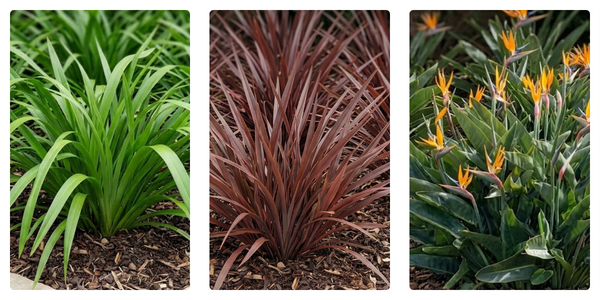
Pictured left to right: Phormium ‘Emerald Gem’, Phormium ‘Jack Spratt’, Strelitzia reginae bird of paradise.
What can I plant around a pool in shade?
Tractor seat plants and liriope are useful options for sheltered pool gardens with less sunlight. The choice comes down to whether you want broad, dramatic leaves or a lower, finer border.
The tractor seat plant commonly sold in New Zealand as Ligularia reniformis has large, glossy leaves. Consider it against a plain wall or behind a seating area, where its foliage has room to spread. It needs moisture and shelter, making it better suited to a protected bed than a hot, dry strip beside paving.
For a lower planting, try Liriope ‘Royal Purple’. Its narrow green leaves and purple flower spikes can bring seasonal colour to a partly shaded border. It typically grows around 30–50 cm tall. Allow for removing old foliage and spent flower stems to keep the planting tidy.
Before deciding, watch the garden bed at different times of day. One side of your pool may receive afternoon sun while the other spends much of the day in shade.
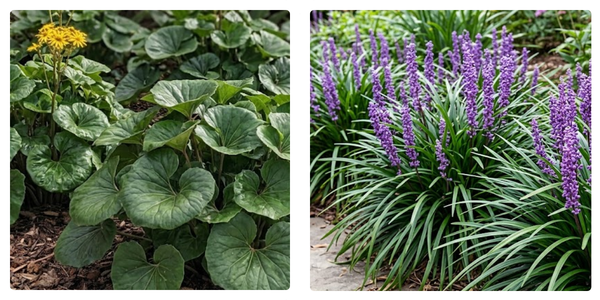
Pictured left to right: Ligularia reniformis or tractor seat plant, Liriope royal purple.
Which plants suit a small pool garden?
Low-growing plants and compact varieties help preserve usable space around a small pool. Mondo grass is a useful option for a border that softens paving without creating a tall screen.
Ophiopogon japonicus ‘Nana’, or miniature mondo grass, forms low green clumps approximately 15 cm tall and 20 cm wide. It can provide a simple edge to a planting bed without dominating the space.
For a stronger colour contrast, consider Ophiopogon planiscapus ‘Black Dragon’. Its near-black foliage grows approximately 20–30 cm tall and would stand out against cream or pale grey paving in a partly shaded position.
A small garden does not need a long plant list. Repeating one low border plant, with a few larger features set further back, can give the area a settled, cohesive appearance.
When choosing a Compass fibreglass pool, include planting beds, seating, and walking space in the layout from the beginning. The right pool size is one that works with the way you want to use the whole backyard.
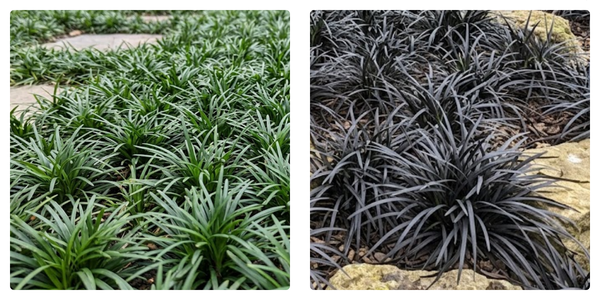
Pictured left to right: Ophiopogon japonicus ‘Nana’, or miniature mondo grass, Ophiopogon planiscapus ‘Black Dragon’.
What can I plant for privacy around a pool?
Star jasmine can provide evergreen screening on a suitable support in a sheltered position. Look for Trachelospermum jasminoides, which has glossy green foliage and fragrant white flowers. It grows in sun or partial shade and needs pruning to keep its vigorous growth under control.
Consider placing it behind an outdoor seating area, set back from the water. You can enjoy the greenery and fragrance while limiting flowers falling directly into the pool.
Plan screening carefully around the pool barrier. Plants, pots, and supports must not create a climbing route into the pool area, and foliage must not interfere with the gate. Check the proposed arrangement with your designer and local council.
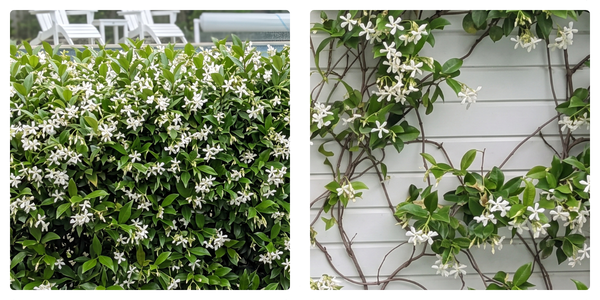
Pictured: Star Jasmine
Will salt water or chlorine splashes damage poolside plants?
Repeated exposure to pool water can damage sensitive plants, so splash tolerance should never be assumed. Tough foliage or suitability for a coastal garden does not automatically make a plant suitable for frequent pool-water splashes.
The plant species, water chemistry, drainage, and amount of exposure all matter. Repeatedly watering soil with pool water can also cause salts to accumulate. Star jasmine, for example, is sensitive to salt and should be kept away from frequent splashing.
Keep planting outside the main splash zone where practical, and use fresh water for routine irrigation. When choosing plants, explain where they will sit in relation to the pool and how much splashing you expect.
How close can I plant to a fibreglass pool?
There is no single planting distance that suits every plant and pool layout. Mature foliage, root growth, paving, underground services, and maintenance access all need to be considered.
Start by allowing enough space for leaves to remain within the garden bed. Keep access to the skimmer and pool equipment clear, and discuss larger plants or trees with your pool installer and landscape designer before planting.
Garden edging and drainage also matter. Soil and mulch should stay in the garden during heavy rain, rather than washing across the paving and into the pool.
If you are planning a new Compass pool, raise these questions while the layout is being developed. It is easier to allow space for planting and access before the surrounding surfaces are finished.
Which plants are best kept away from the pool’s edge?
Keep plants with heavy litter, thorns, or bulky overhanging growth away from the immediate swimming and walking areas.
Think carefully about:
- Deciduous trees whose autumn leaves will fall directly into the water.
- Fruiting plants that drop fruit onto paving or into the pool.
- Thorny plants beside steps, paths, or seating.
- Large palms that shed bulky fronds or fruit clusters.
- Plants that will quickly outgrow the available bed.
Some of these may still suit another part of the garden. A tree that creates a lovely backdrop at a distance can become a regular cleaning job if its branches extend over the water.
Does planting matter if I choose a self-cleaning pool?
Yes. Sensible planting helps reduce the amount of debris entering any pool, including one with an automatic cleaning system.
Compass offers Vantage as an optional in-floor cleaning and circulation upgrade. It is designed to circulate pool water and remove debris, helping reduce the work involved in keeping the pool clean.
If easier maintenance is important to you, consider the planting and cleaning system together. Keep overhanging growth to a minimum, choose plants with manageable upkeep, and ask your Compass dealer how Vantage would work with your chosen pool, including the ongoing care required.
How do I plan a pool and garden that work together?
Start with what you want from the finished space: privacy, room for loungers, a view of the water from the house, or greenery that needs only occasional attention.
Bring backyard photos, approximate measurements, and a few inspiration images to your Compass dealer. Discuss the pool’s size, position, and cleaning options before finalising the landscape design. Your landscape designer can then help select plants suited to the available beds and growing conditions.
Talk to your local Compass Pools dealer about the right pool layout and cleaning options for your backyard.